The first snow of the year arrives with more confidence than it deserves. Roads that were fine at breakfast are treacherous by noon, the gear you owned last winter has moved to a different cupboard, and every lift, hut and car park on the route is still on its summer schedule. The list below is how we prepare for that first trip, when the season is new for everyone including the people running it.
The first snow is always the worst snow
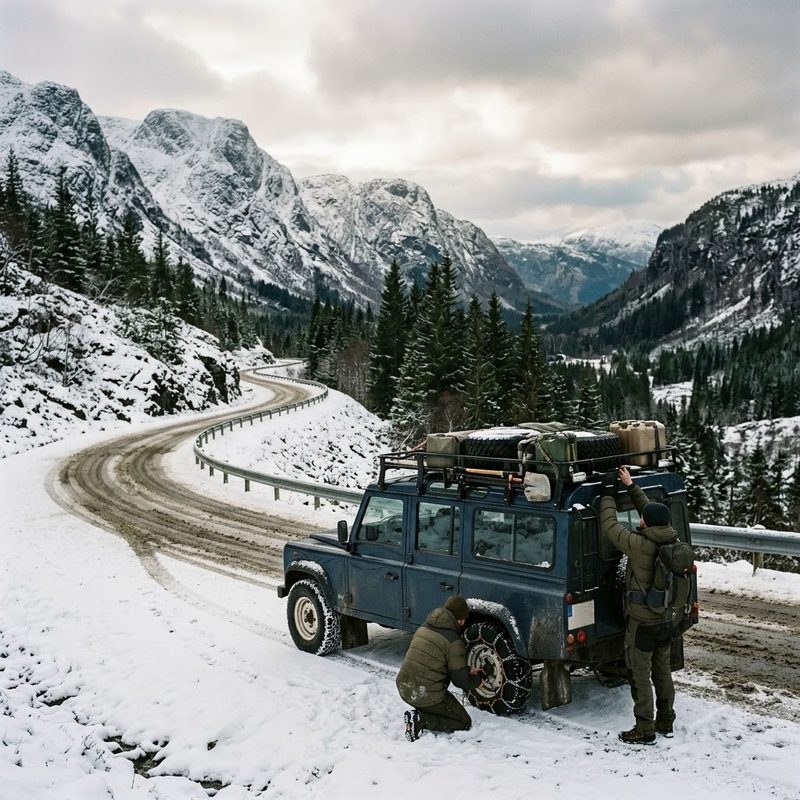
Fresh snow on a warm road melts underneath and refreezes into a film you cannot see, and the first weeks of the season are covered in wet leaves that behave like ball bearings. Most drivers have not yet adjusted their stopping distance, so the accidents cluster in exactly this window. Treat every shaded bend and every bridge deck as if the gritting lorry has not been through yet.
Check the road status the night before and again before you leave, not the general forecast but the specific route. Mountain roads close for drift, for wind, for rockfall triggered by the freeze, and sometimes simply because the season's first plough has not reached that stretch. A closure at the top of the valley means the walk starts lower down, and that is a plan change rather than a wasted day.
Fuel and charge matter more in cold weather. Keep the tank well above half, since idling in a queue burns fuel while the heater runs, and cold batteries lose range faster than the dashboard suggests. The same applies to the power bank in your pack: take it out of the cold for the descent.
What stopped being optional
Winter equipment moves from sensible to legally required around the start of November in many mountain countries, and the exact dates and fines vary by region. Check the rule where you are driving rather than where you live, because crossing one pass can put you under a different authority. That means chains for the drive, and the patience to fit them once on the driveway instead of on a camber in traffic.
The car kit that first snow demands is small and unglamorous: an ice scraper you can reach without opening the door, de-icer, a torch, a warm layer that lives in the boot, and a tow strap or a bag of grit for the moment you stop on an incline. Washer fluid rated for freezing temperatures is the item everybody forgets, usually by driving through a spray of brown slush at fifty kilometres an hour.
Inside the bag, the same rule applies. Traction devices that turn a boot into a winter sole, gaiters, a spare hat, dry gloves in a sealed pouch. The kit that feels excessive in October is exactly the kit that gets used on the first trip.
The ground under the snow
Untracked snow makes every trail longer. The path disappears, the markers take on a different shape, and a route that took two hours in summer can take three and a half when you are breaking trail yourself. Allow for that in the daylight window rather than discovering it at the turnaround point.
Microspikes or a light set of crampons decide whether an icy morning path is a pleasure or a fall. Poles matter more than they do in summer, because the slope you cannot see under the snow is the one that will put you on the ground. Gaiters and water-resistant trousers keep the first wet crossing from becoming a cold afternoon.
Avalanche terrain is the serious part. Early-season snowpack is thin and often sitting on a weak, faceted layer, which is a recognised pattern for early-winter accidents even when the total depth looks harmless. Read the bulletin for your specific range, keep the group spread out on suspect slopes, and treat the first snow of the year as the time to check that transceivers, probes and shovels still work.
The trade-offs you are actually making
Early season buys space. Lifts, refuges and car parks that will be packed by January are quiet, rooms are easier to get midweek, and the same slope can feel like yours alone. Daylight is the price: the sun clears the ridges late and sets early, so a slow start costs more than it would in June.
Some things simply are not open yet. Summer trails may be closed for the season, high huts may shut their doors, and cable cars often run on a reduced timetable for maintenance before the winter rush. Have a lower-altitude alternative written down, one that works in rain as well as snow, and treat the closed door as information rather than bad luck.
Temperature swings cut both ways. A cold, clear morning can turn into a warm afternoon fast enough to soak your base layer, and cotton against the skin is how people get cold while still working hard. Dress for the climb rather than the car park, and carry the shell even when the sky is empty.
The five-minute check before the keys
Forecast, avalanche bulletin, road status, daylight hours, in that order. If all four agree, the trip goes ahead as written. If one of them disagrees, you move the objective down a hill rather than argue with it, because the mountain will be in the same place in two weeks when the season has settled.
Then the ordinary items: charged phone, cash for a mountain car park, a flask, gloves in the pocket rather than in the bag. The first snow trip is mostly about arriving already dressed for it, and everything above exists to make sure the day starts at the trailhead instead of in a lay-by.