Rail travel across several countries is straightforward until the moment it is not, and nearly every failure hides in the small print. A reservation you assumed was included, a twenty-minute transfer between two stations in the same city, a ticket that only exists in an app you planned to download later. The order below is how we work through a multi-country trip, starting with the decisions that get harder the longer you wait.
Reservations come before routes
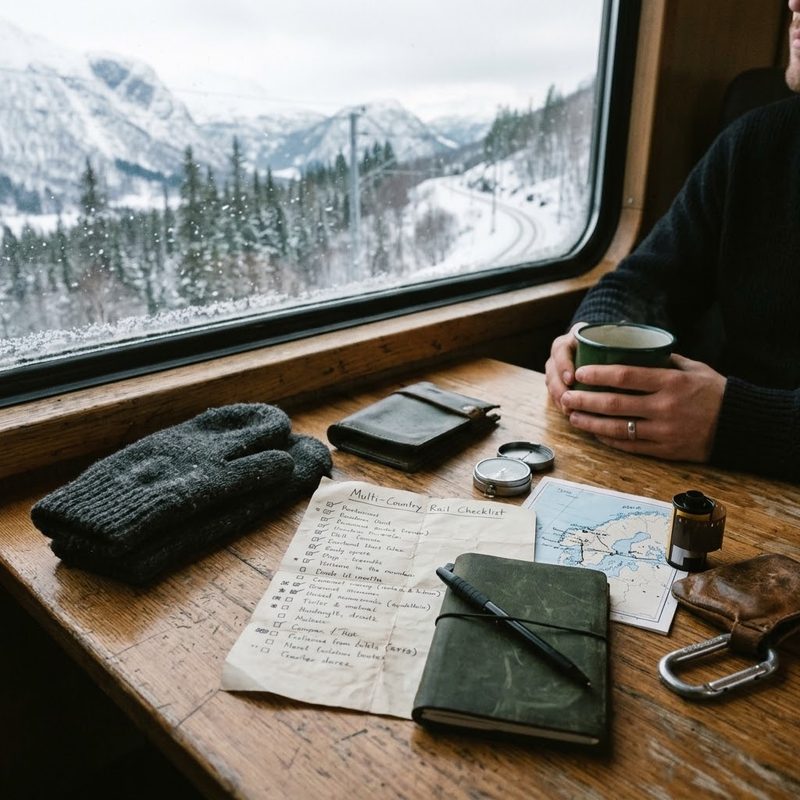
A rail pass or a bundle of cheap advance tickets gets you on the train, but high-speed services in several countries also require a seat reservation bought separately. Those reservations are charged per train rather than per day, and the fee sits on top of whatever pass you hold. Expect roughly ten to twenty euros a leg on most high-speed routes, more on a handful of premium ones.
The working rule is to book the long reserved legs first and build the flexible days around them. Trains with compulsory reservations behave like flights: the cheapest seats go early, and a sold-out leg forces a different day rather than a different hour. Regional and border trains that need no reservation stay cheap and can absorb any plan that changes.
Overnight trains are the other early decision. Couchettes and sleepers are limited in number, so those berths sell first, while a seat reservation on the same train stays available for longer. Decide whether you are buying sleep or merely a way to move at night before you compare prices, because the two are not the same product.
Seats, direction and the overnight leg
Reservation rules vary and the seat map is only half the story. A quiet carriage, a forward-facing window seat and a spot away from the doors make a four-hour leg feel shorter; on older rolling stock the direction of travel changes how much you feel every curve. Families with small children tend to cluster in one coach, and that is worth knowing if you want either company or silence.
On a long-distance train, keep the bag inside your sightline the whole way. Overhead racks are convenient and anonymous, and the first hour of a journey is when people still walk the aisle freely. A seat with the luggage at your feet costs a little comfort and buys back a laptop, a camera and a week of plans.
If a leg has no reservation, treat it as a bet. Sit somewhere you can watch the rack, avoid the first and last stations on the route, and have the same journey one hour later already worked out. Busy afternoons mean standing room for the first stretch, which is survivable when you expected it and miserable when you did not.
Station logistics, including the transfer you did not count
Find out which station each city uses before anything else. Some cities have several, and a change between them needs a taxi or a metro ride, a security queue and a real buffer. Forty-five to an hour is the minimum we will accept between two different stations, and even a same-station change gets thirty minutes when luggage is involved.
Inside the big terminals, the useful information is boring: where the lockers and left-luggage desks are, how far the platforms run, and when the train number appears. At many main stations the platform shows up only in the last twenty minutes, so the habit is to wait in the concourse rather than camp at the end of a wrong platform.
Bag checks exist at some terminals and add ten minutes at busy times. The walk from the street to a long-distance platform can also be longer than it looks on a map, particularly in older stations where the taxi rank sits at the far end from the international departures.
What to test before you leave home
Complete every booking on the device you will actually carry, with the card you will actually travel on, and confirm that the confirmation email arrives. Payment screens on some national carriers dislike foreign cards or ask for an extra verification step, and discovering that on a station bench is a poor way to lose a seat.
Then make the whole trip readable without a signal. Save the reservations as PDFs or screenshots, write down the booking references, and set alarms in the correct time zone for the first two departures. A pass that must be activated on a specific date counts as a reservation too, and it needs the same reminder.
Check the timetable once more a few days out. Engineering works replace trains with buses on weekends more often than travellers expect, and the replacement leaves from outside the station rather than from the platform you booked. Download the maps you will need, sort a data plan, and pack the adapter before the night before.
The first hour on board
Once the doors close, the routine runs in the same order every time. Find the seat, set the bag where you can see it, note the location of the exits and the cafe car, and check the display for the stop before yours. Passport or identity checks happen on some international routes, sometimes while you sleep, so the document stays in the same pocket for the whole trip.
Nothing in this list is complicated. The point of doing it in this order is that every early decision keeps the later ones open, and a rail trip collapses only when a reservation, a transfer or an activation date has quietly been left to chance.