I once left at five in the morning with a tyre warning I had decided to look at after coffee, and found out what a slow leak costs when the light comes back on ninety miles from anywhere. The driving day is decided the night before it starts, so I run the same short list at the kitchen table with the keys already on it.
The route, written twice
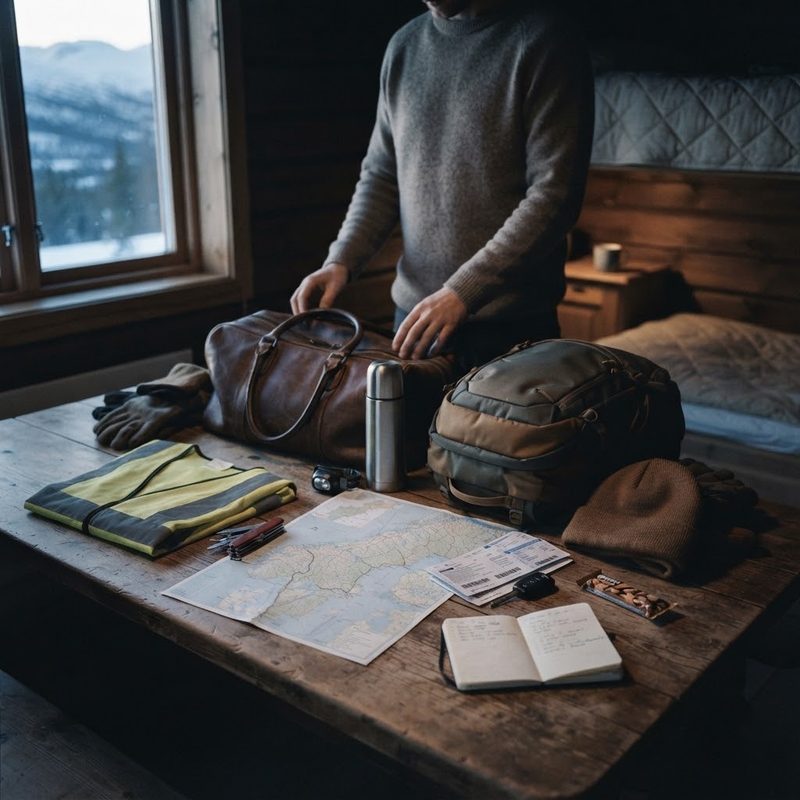
The route goes into the phone and onto paper, because a dead phone at a junction outside a town I do not know is exactly how a six-hundred-mile day turns into nine hours. On the paper I write the legs rather than the whole line: first leg, fuel stop, second leg, the stretch with no services, and the arrival window in local time.
I check three things on the map before I close it. Which stretches are motorway and which are two-lane road, since that decides the fuel figure. Where the construction zones sit, because a ten-mile closure at the wrong hour costs an hour. And where the last fuel stop is before the long empty section, which is the one I will actually remember at three in the afternoon.
The weather window gets its own line. I want to be over any high ground or coastal stretch before the heat of the day builds wind, and I would rather leave at five forty and stop early than sit in a queue at ten because everyone else had the same idea.
Fuel, money and the envelope
Fuel is the one number I fix the night before, because it is the one that moves. I work it as miles divided by what the car actually returns on a long run, not what the dashboard promised in town, and I add a margin of about ten per cent for detours and idling.
- Photo of the odometer and the fuel gauge, taken in the driveway, so the trip starts at a number I can argue with later.
- Tyre pressure checked cold in the morning, set to the figure on the door pillar rather than the one moulded into the sidewall.
- Oil level, washer fluid and both wipers looked at while the bonnet is up anyway.
- Charging cable, toll pass, and the roadside assistance card in the same pocket as the documents.
Cash for the day goes into one envelope and receipts come back into it, which makes the per-day figure at the end honest instead of guessed. I aim at a fuel and food number for the day and write it on the front, and I check the total against the last trip rather than against a feeling.
What is already in the car
Loading happens the night before, not at four in the morning, and it happens in a fixed order: boot first, then the seat, then the things I will reach for without stopping.
- Water and something substantial to eat at the first stop, so the plan does not depend on a town opening at six.
- A warm layer and a waterproof within reach, because the temperature at elevation has nothing to do with the temperature at the driveway.
- Paper map of the state or region, sunglasses, and a torch that works.
- A bin bag, paper towels and a roll of tape, none of which I have ever regretted carrying.
The passenger seat gets cleared rather than filled. A pile of soft bags at my elbow is what makes me lean and twist for nine hours, and by the second fuel stop that is the difference between arriving flat and arriving able to eat dinner.
Sleep, food and the arrival
A six-hundred-mile day behind the wheel is not a fitness test, so the arithmetic starts with sleep: I will not begin before I have had five hours, which usually means the choice between an early night and a late start is already made by six in the evening. If the arrival is after dark I book the bed the night before instead of hunting for one tired, and I put the address in the phone twice.
Breakfast is decided with the departure time, since a cafe that opens at seven is useless to a car that wants to roll at five forty. I make coffee the night before and put it in a flask, which buys me the first two hours and keeps the first stop short.
The first twenty miles
The list ends with the morning itself: out of the driveway slowly, a glance at the kerb for a wet patch where the leak was, and then one stop inside the first twenty miles to check the tyre again in daylight and to look at the oil with the engine cold. Everything else on this list is cheap at night and expensive at speed, and that first stop is where I find out which one I got wrong.